Duncan Faure - Man of a Thousand Dreams by Mary Fortney
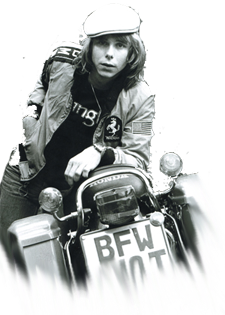 The Artist The Artist
Sounds for all ears, tastes, and interests best describe the music of Duncan Faure. Recordings by the South African born songwriter/musician have been a staple in the collection of many a rock music enthusiast since the mid-seventies.
From the fun loving "Dingley's Bookshop" to the grind of "Feels like Magic"...ballads to rockers, there is something for everyone.
Faure's career spans over 4 decades. From a youngster in his first band, to the present, he has consistently maintained a quality of musicianship few performers - past or present- have achieved.
The best public documentation of his career to date, begins in 1972 with his band, ORANGE CASH BOAT. A group dubbed as, "South Africa's Youngest Pop Sensation", they recorded "Girl on Her Own" b/w "Chi Chi Boo Boo". These two rarities are gems, and although sounding simplistic to some, a young teenaged Duncan and his evolving style are heard loud and clear.

The OCB lineup included childhood friends, Raimond Miller and Franco Del Mei - whose names most surely ring a bell to those familiar with Faure's work in the mid-90's with his First World Band. But let's not jump too far ahead... Duncan achieved international fame upon joining South Africa's, RABBITT in 1975. His progressive keyboard style assisted in completing the sound that many have come to associate with "the biggest band to have come out of South Africa". Rabbitt blew audiences away. And no other South African band, either before or since, has received as much press as they. Rabbitt consisted of Faure, Trevor Rabin, Neil Cloud, and Ronnie Robot. They racked up 3 gold albums, and received a 1977 SARIE award for best group.
In the summer of '77, Rabin left the band, leaving Faure to carry on as primary songwriter and lead vocalist. Duncan did the job proud - turning out an extraordinary third and final album in "Rock Rabbitt", which was described by those in the music industry as "an overwhelming experience".
But by January '78, forces both within the band and out, forced them to break up. Each member going his separate way. The greatest band South Africa had ever known - was no more.
Later, that same year, history repeated itself with Faure stepping into a vacant lead role with the Scottish, BAY CITY ROLLERS.
The band had recently suffered a set back with the loss of its popular lead singer, Les McKeown. Duncan had been working on a solo deal in the States, but felt that things were moving a bit too slow for his liking. And so, into his third band, he stepped.
The band professed to its young followers that despite the dramatic shift in line up, the music would remain largely unchanged. Yet, what was discovered on its first Faure-featured album , Elevator, was a fearless purging of musical talent never before heard from the band.
It appeared that Duncan's arrival had given the other members the freedom to express themselves shamelessly - uncovering a previously hidden musical drive and determination to be taken seriously.
Sadly, the change in style came too late for some fans. Others resented the seemingly endless change in band members. And, as is often the case with pop sensations, the band's popularity began to slide, in spite of the amazing musical growth during this period. Faure's contribution to the Rollers has, at times, been underestimated by those unfamiliar with his work. It is time to set the record straight. There is simply no doubt that although the Bay City Rollers were a fun and entertaining pop group prior to Faure's arrival, they emerged serious and determined musicians during his time with them. Duncan Faure had left his mark.
Lack of support from the band's record company, and members wanting to move on with their lives, forced the groups demise in 1982.
Never looking back for a moment, Duncan moved into yet another musical venture with KARU - a 3 piece band with fellow former Roller, Stuart Wood. The band played primarily Southern California and South African venues, bringing in a #2 chart hit in South Africa with "Where is the Music". The album, which produced this single, was called "Karu Cuts", and continues to be one of the most difficult "Faure Finds" for the avid collector. The band was powerful, and produced solid tunes and crowds alike. But in 1983, Wood was called back for a Bay City Roller reunion, as Duncan stayed behind in California to play a series of solo gigs featuring his own material as well as some hauntingly good Beatles tunes.
Not to be one to let the moss grow, this time was also spent lending his talent to other musicians. Duncan can be heard on any number of mid-late eighties releases by Bonham, Tyrants in Therapy, Trevor Rabin and more.
In 1988, he contributed to Madonna's "Who's That Girl?" soundtrack with his single "24 Hours". Although this song departed somewhat from his usual style, Duncan showed his versatility, and it paid off big time. The album sold 5 million copies.
In the early 90's Faure found himself working with yet another former Bay City Roller. This time, Ian Mitchell had jumped on board, and the two formed the JOYBUZZERS - a band which , once again, played mainly for the California crowd. During this time, Duncan composed a song, which was to be later dubbed by many as, "A Peace Anthem". The song was, "Let It Be Right".
More solo work soon followed after Mitchell moved on to join other former Rollers in other pursuits. A forceful CD with the American title "Come & Get It" was released in 1993, and "Let it Be Right" was included on it. Another South African chart topping single was on this CD as well, entitled "There's a New Today" which reached #2 in the South African Charts. But "Let it Be Right" was viewed as such a timely and profound piece of work in South Africa, that it was performed by George Benson at the 1993 Miss World Pageant. In addition, it was sung as a final "Mass Song" in the 1994 RAG Song For Peace Choir Festival by a mass choir of 500 primary school aged children. If not long before this, it was surely at this point, that Duncan Faure had proven himself to be a mainstay in South African music history. He had made a difference.
Duncan remained in South Africa during this time, at one point paying homage to his musical idols, The Beatles, in "Beatlemania Lives On". This live, tribute show earned him rave reviews and crowds refusing to let him leave the stage. The shows were touted as "not an imitation, but a celebration" of the Fab Four.By 1996, more new, original music emerged in the form of "For the Rights of All Man", a CD which reunited him with childhood band mates, Franco Del Mei and Raimond Miller. Keyboardist, Cathy Sherman, who had helped Duncan bring down the house previously during the "Beatlemania" shows, joined them. The addition of fiancée', Laurie McClain made THE FIRST WORLD BAND complete.
The 18-track effort brought to light a side of Duncan, which was new to many of his listeners. Those previously accustomed to the dreamy ballads and bump and grind, lust-filled rockers, were now given a glimpse of what lay within.
The songwriter, who only a few years earlier, had cried out for peace worldwide, now sang of his own personal pain. The recent losses of both his father, William (Bill) Faure, Sr. and brother, William (Bill) Jr., had delivered him to a crossroads where the songwriting seemed a therapeutic approach to his grief. Although many songs included were "classic Faure," others not only mourned losses, but celebrated lives. Duncan reached out through his music again; this time, personally. The CD earned him praise from both those in the industry, and consumers alike. Many have called it his most sincere work to date.
Coincidentally, a relatively fresh resurgence of Bay City Roller fans was currently sweeping the United States in the way of nostalgic fan gatherings as well as considerable Internet attention. Faure was invited to attend the fan fests - and in June 1998, was finally able to make the trek from South Africa to New Orleans with new musical partner, Mark Townsend. Together, the two were called the BLUEBOTTLES -- and the sound was a unique blend of both musicians' vocal and songwriting talents. The BlueBottles continued to play club dates in the US/Canada throughout the summers of '98 and '99 winning over new fans wherever they played.
Building on the success of the recent tour, during a break Duncan recorded the 1999/2000 GetGo release "Pronounced Four-uh". Featuring production by Tommy Dunbar (Rubinoos) and the talents of Kyle Vincent, Mark Townsend among others, the cd is filled with classic 'power-pop' and remains a top shelf favorite among many Faure fans.
In 2001 Duncan was embraced by recording giant EMI South Africa to record a 14-track cd of original music. Collaborating on a few tunes with renowned South African producer and drummer Kevin Kruger and EMI's managing director Irving Schlosberg, "Take The Good" was released in August of 2002. Two notable tracks on the album - rocker "Turn Me Back On The Radio" and the romantic ballad "Not Enough Hours" generated significant airplay on several South African radio stations.
The song 'Let It Be Right' received attention again in 2003 when it was infused with messages of patriotism and support for the troops fighting in the Iraq war and was made available on his website as a free download. Now a heart wrenching song of love and honor it was heard over the airwaves throughout America, heavily requested in some areas with messages of 'thanks' pouring in from all over the United States, Canada, UK and the soldiers themselves stationed abroad.
Recently Duncan moved back to Las Vegas, California with his wife, Laurie and their two young children, Julia and William, - named after Duncan's late brother William Faure Jr, who was such a force in Duncan's formative years. Working from his home studio Duncan writes and records daily.
Over the years, Duncan Faure has been sure to leave his legacy. It's a legacy of music; and a hope for peace and dignity for all. Through all the changes he's endured, he continues to deliver a solid sound, and refuses to compromise the integrity of his music. Stay tuned: surely, there are more chapters to come in this musician's career!
References: The History of Contemporary Music of South Africa-Toga Publishing, 1994 by: Garth Chilvers and Tom Jasiukowcz "Like a Child Again" - by Silke Friedrich (Sunday Times Magazine - January 15, 1995)
================================================================
Duncan recently signed with Global Recording Artists and is working on an Anthology and a new cd called Kick of the Rhino. Duncan is planning on kicking off the new decade with a new touring band and hitting the road playing new material from his upcoming cd and set of Rollers/Rabbit classics sure to please the crowd.
|

